KI-Gewächshaus: Sensorik für Energie-Ertrags-Optimierung Personal- und Energieintensive Sorten
The agricultural industry is witnessing a significant transformation with the integration of AI-driven greenhouse technology. This innovative approach focuses on optimizing energy efficiency and crop yields, particularly for personal and energy-intensive crops.
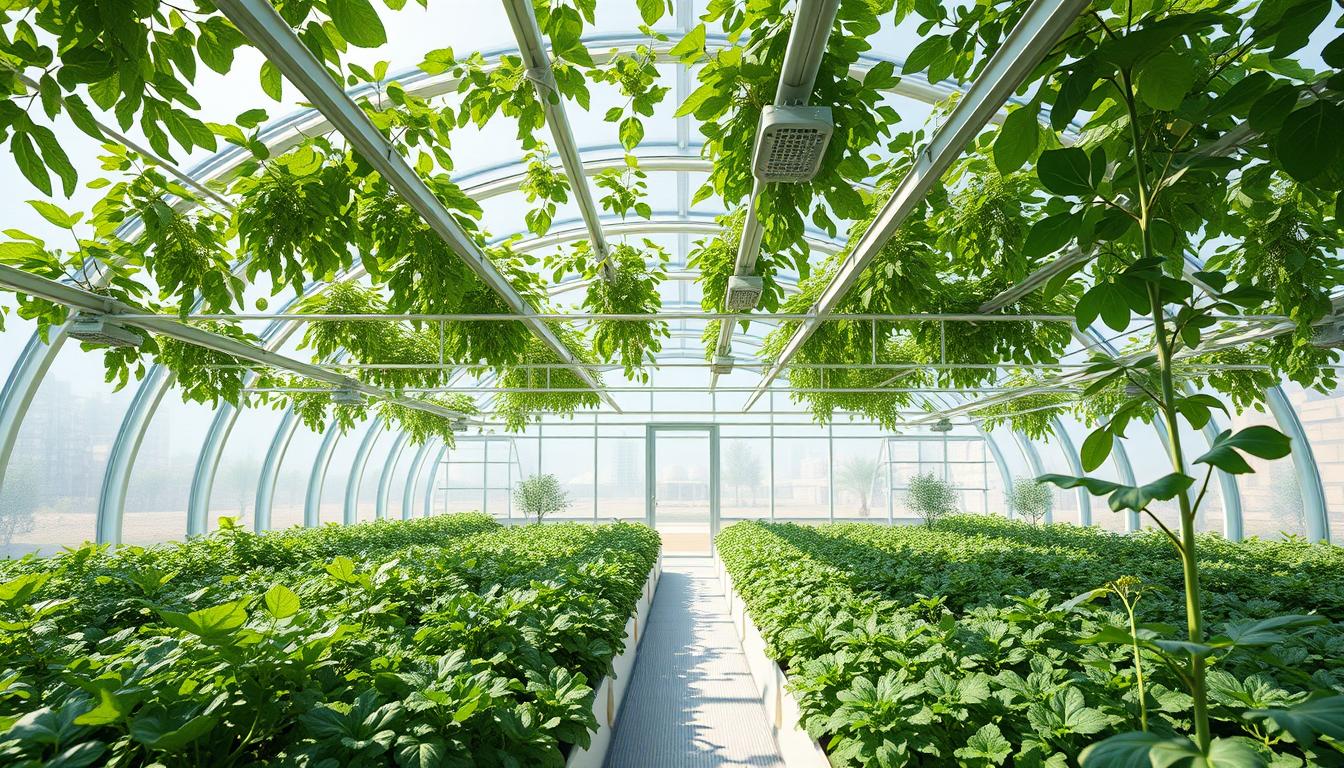
By leveraging smart greenhouse technology, farmers can now monitor and control various parameters such as temperature, humidity, and light exposure. This data-driven approach enables growers to make informed decisions, resulting in improved crop quality and reduced energy consumption.
The use of advanced sensors and AI algorithms in greenhouses is revolutionizing the way crops are cultivated. This technology has the potential to transform the agricultural landscape, making it more sustainable and productive.
Key Takeaways
- AI-driven greenhouses optimize energy efficiency and crop yields.
- Smart greenhouse technology enables data-driven decision-making.
- Advanced sensors and AI algorithms improve crop quality.
- Energy consumption is reduced through precise monitoring and control.
- The agricultural industry is becoming more sustainable and productive.
The Revolution of AI-Driven Greenhouse Technology
The advent of AI in greenhouses is marking a new era in agriculture. As the global demand for food production increases, greenhouse operators are facing significant challenges in managing their crops efficiently.
Understanding the Challenges of Modern Greenhouse Management
Modern greenhouses require precise control over environmental conditions to optimize crop growth. However, this precision comes with significant energy costs and labor requirements.
Energy Consumption Challenges in Controlled Environments
Greenhouses consume a substantial amount of energy for heating, cooling, and lighting. This energy consumption not only increases operational costs but also has a significant environmental impact.
Labor Requirements for High-Value Crops
Crops such as tomatoes, cucumbers, and strawberries require intensive labor for monitoring, pruning, and harvesting. This labor-intensive process can be costly and time-consuming.
How AI Sensors Transform Greenhouse Operations
The integration of AI-driven sensors is revolutionizing greenhouse management by enabling automated monitoring and data-driven decision-making.
The Shift from Manual to Automated Monitoring
AI sensors can monitor temperature, humidity, CO2 levels, and other critical parameters in real-time, reducing the need for manual monitoring.
Data-Driven Decision Making Benefits
By analyzing data from AI sensors, greenhouse operators can make informed decisions about irrigation, fertilization, and pest control, leading to improved crop yields and reduced waste.
| Benefits | Manual Monitoring | Automated Monitoring |
|---|---|---|
| Accuracy | Low | High |
| Labor Requirements | High | Low |
| Energy Efficiency | Low | High |
Essential Sensor Types for Smart Greenhouse Monitoring
The backbone of a smart greenhouse is its sensor network, which provides real-time data on various parameters crucial for optimal plant growth and energy efficiency.
Environmental Sensors: Temperature, Humidity, and CO2
Environmental sensors are vital for monitoring temperature, humidity, and CO2 levels within the greenhouse. These parameters directly impact plant health and growth.
Placement Strategies for Accurate Readings
To ensure accurate readings, sensors should be placed strategically throughout the greenhouse, avoiding areas with potential heat sources or drafts.
Recommended Sensor Densities Based on Greenhouse Size
The density of sensors required can vary based on the size of the greenhouse. Larger greenhouses may need more sensors to ensure comprehensive coverage.
Light and Radiation Sensors
Light and radiation sensors, including those measuring Photosynthetic Active Radiation (PAR), are essential for understanding the light conditions within the greenhouse.
PAR Measurement for Optimal Plant Growth
PAR measurement helps in assessing the light available for photosynthesis, enabling growers to adjust lighting conditions for optimal plant growth.
Soil and Substrate Monitoring Sensors
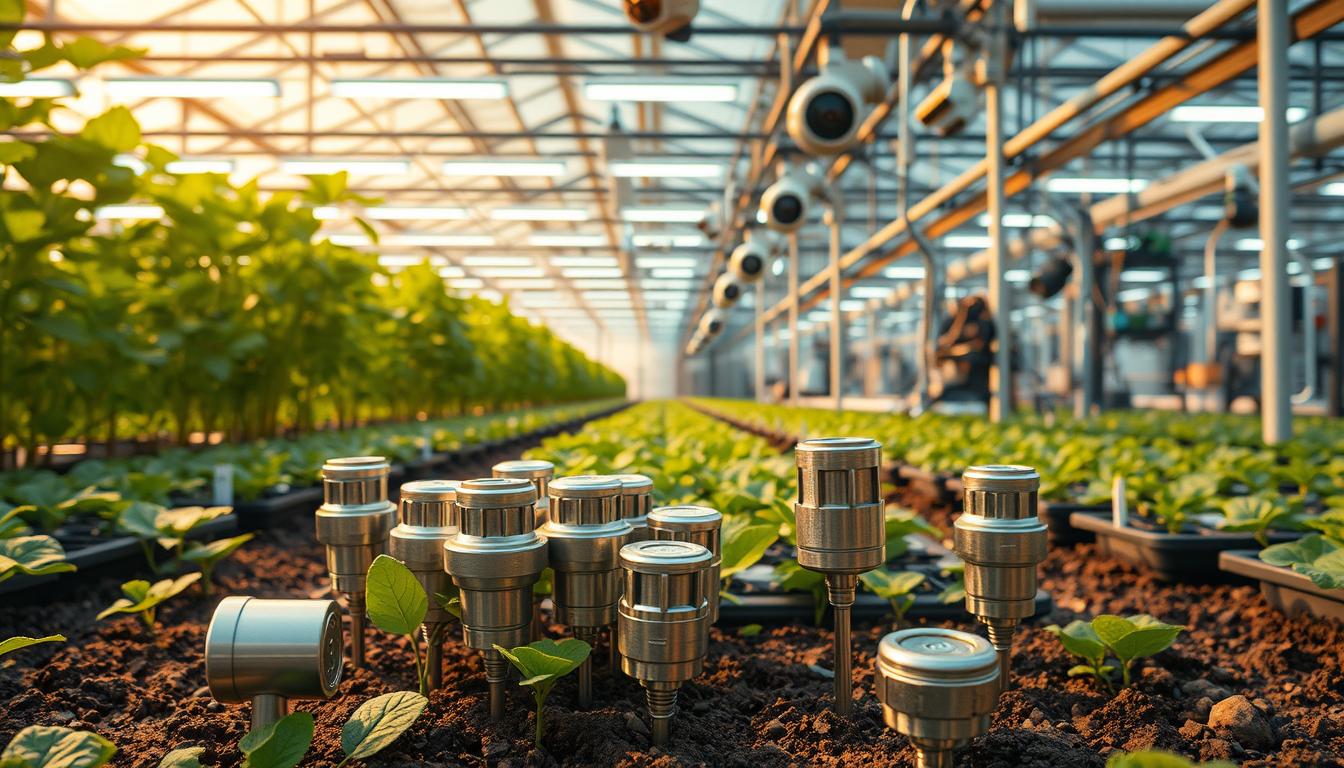
Soil and substrate monitoring sensors track moisture, EC (Electrical Conductivity), and pH levels, providing insights into the soil conditions.
Moisture, EC, and pH Monitoring Systems
These monitoring systems are critical for maintaining optimal soil conditions, preventing overwatering, and ensuring nutrient availability.
Setting Up Your AI Sensor Network: Step-by-Step Guide
Setting up an AI-driven sensor network can revolutionize your greenhouse management by providing real-time data on environmental conditions. This step-by-step guide will walk you through planning your sensor deployment strategy, installation and calibration procedures, and connecting sensors to your central management system.
Planning Your Sensor Deployment Strategy
Effective sensor deployment is crucial for comprehensive monitoring. Begin by identifying critical zones within your greenhouse that require constant surveillance.
Mapping Critical Monitoring Zones
Map out areas with varying conditions, such as temperature and humidity gradients, to determine optimal sensor placement.
Creating a Sensor Placement Diagram
Create a detailed diagram illustrating where each sensor will be placed to ensure thorough coverage and minimal blind spots.
Installation and Calibration Procedures
Proper installation and calibration are vital for accurate data collection.
Mounting Hardware Requirements
Ensure you have the necessary mounting hardware to secure sensors in place, protecting them from environmental stressors.
Initial Calibration Process
Follow the manufacturer's instructions to calibrate your sensors, ensuring they provide accurate readings from the outset.
Connecting Sensors to Your Central Management System
Integrating your sensors with a central management system enables real-time monitoring and data analysis.
Wired vs. Wireless Configuration Options
Choose between wired or wireless configurations based on your greenhouse's infrastructure and specific needs.
Setting Up Data Transmission Protocols
Establish a reliable data transmission protocol to ensure seamless communication between sensors and the central system.
| Configuration | Advantages | Disadvantages |
|---|---|---|
| Wired | Reliable, Secure | Complex Installation, Limited Flexibility |
| Wireless | Easy Installation, Scalable | Potential Interference, Security Concerns |
Data Collection and Analysis: Making Sense of Sensor Readings
Data collection is the backbone of modern greenhouse management, enabling informed decisions that optimize crop yields and reduce energy consumption. By leveraging sensor data, greenhouse operators can gain valuable insights into the complex interactions between environmental factors and plant growth.
Establishing Baseline Measurements
To make sense of sensor readings, it's essential to establish baseline measurements for various environmental parameters. This involves collecting data over a period to understand normal fluctuations.
Creating Crop-Specific Parameter Profiles
Different crops have unique requirements. By creating crop-specific parameter profiles, greenhouse operators can tailor their management strategies to meet the specific needs of each crop, enhancing growth and reducing waste.
Interpreting Sensor Data Patterns
Sensor data patterns can reveal critical information about the greenhouse environment. By analyzing these patterns, operators can identify trends and anomalies.
Identifying Normal vs. Abnormal Fluctuations
Distinguishing between normal and abnormal fluctuations in sensor data is crucial for maintaining optimal growing conditions. This helps in early detection of potential issues, allowing for timely interventions.
Using AI Algorithms for Predictive Analysis
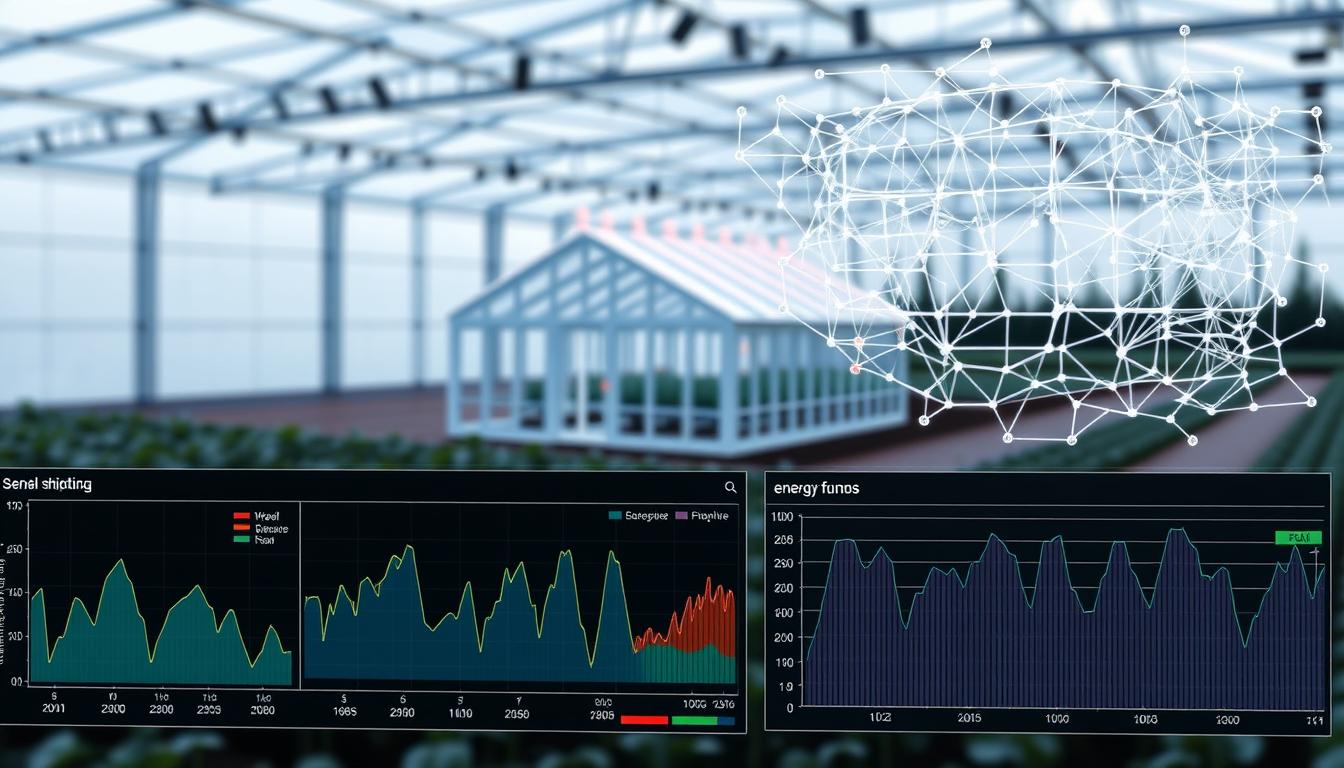
AI algorithms can be employed to analyze sensor data and predict future trends. This enables proactive decision-making and further optimization of greenhouse operations.
Setting Up Alert Thresholds and Notifications
By setting up alert thresholds and notifications, greenhouse operators can be informed immediately if any parameter goes out of the optimal range, ensuring prompt action.
| Parameter | Optimal Range | Alert Threshold |
|---|---|---|
| Temperature | 20-25°C | <18°C or >28°C |
| Humidity | 60-80% | <50% or >90% |
| CO2 Levels | 800-1200 ppm | <700 ppm or >1500 ppm |
KI-Gewächshaus: Sensorik für Energie-Ertrags-Optimierung Stromfee.AI
The Stromfee.AI system revolutionizes greenhouse management by optimizing energy efficiency and crop yields through advanced sensor technology. This innovative approach to greenhouse management is crucial for reducing operational costs and environmental impact.
Key Features of the Stromfee.AI System
The Stromfee.AI system boasts an integrated sensor suite that monitors various environmental parameters, ensuring optimal growing conditions. The key components include:
- Temperature and humidity sensors
- CO2 monitoring devices
- Light and radiation sensors
Integrated Sensor Suite Components
These sensors work in tandem to provide a comprehensive view of the greenhouse environment, enabling precise control over climate conditions.
Energy Consumption Monitoring Tools
Stromfee.AI also includes advanced tools for monitoring energy consumption, helping greenhouse operators identify areas for improvement and reduce their energy footprint.
Implementation Process for Maximum Efficiency
Implementing Stromfee.AI involves a systematic approach to ensure maximum efficiency. The process includes:
- A thorough assessment of the greenhouse's current infrastructure
- A step-by-step setup guide for the Stromfee.AI system
- Integration with existing greenhouse management systems
Real-Time Monitoring and Adjustment Capabilities
One of the standout features of Stromfee.AI is its real-time monitoring capability, allowing for immediate adjustments to be made as needed. The system includes a mobile application for remote monitoring and control, as well as automated response configuration for optimal climate management.
Optimizing Energy Consumption Through Intelligent Controls
Intelligent controls are revolutionizing the way greenhouses manage energy. By integrating advanced sensors and AI algorithms, greenhouses can significantly reduce their energy consumption while maintaining optimal growing conditions.
Smart Heating and Cooling Management
Efficient temperature control is crucial for plant health and energy savings. Two key strategies for smart heating and cooling management are:
- Zone-Based Temperature Control Strategies: By dividing the greenhouse into separate zones, each area can be maintained at the optimal temperature for the specific plants being grown.
- Weather-Responsive Adjustment Algorithms: These algorithms adjust heating and cooling based on real-time weather data, ensuring that the greenhouse environment remains stable and energy-efficient.
Automated Lighting Schedules Based on Plant Needs
Lighting is a significant energy consumer in greenhouses. Automated lighting schedules can help optimize energy use:
- Supplemental Lighting Optimization: AI systems can determine the exact amount of supplemental lighting required, reducing energy waste while promoting healthy plant growth.
Water and Irrigation Efficiency Techniques
Efficient irrigation is vital for both water conservation and energy savings. Key techniques include:
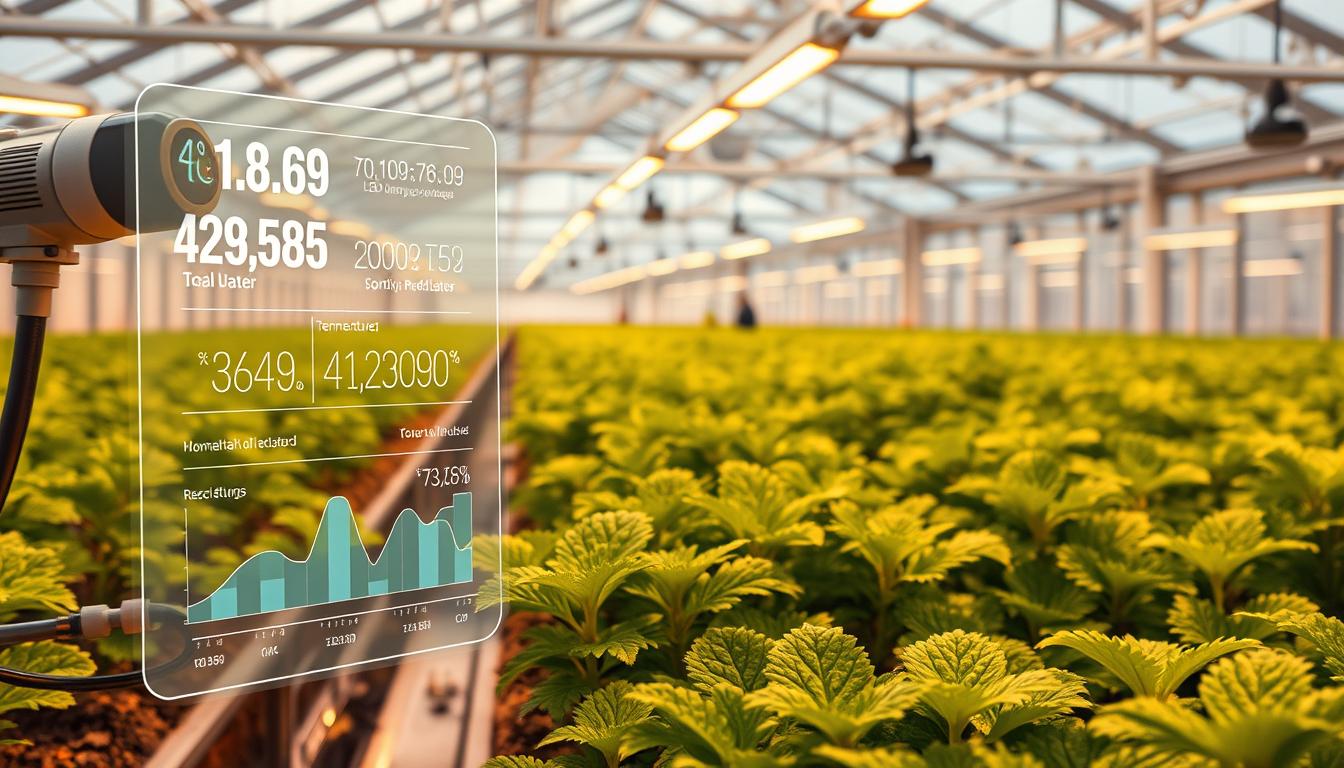
- Precision Watering Based on Real-Time Substrate Data: Sensors monitor the moisture levels in the substrate, allowing for precise irrigation that reduces water waste and energy consumption.
By implementing these intelligent controls, greenhouses can significantly reduce their energy consumption while improving crop yields and quality.
Maximizing Crop Yields with Data-Driven Decisions
Data-driven decision making is revolutionizing the way we approach crop yield maximization in modern greenhouses. By leveraging advanced sensor technology and AI-driven analytics, growers can now make informed decisions that significantly impact their crop yields.
Tailoring Growing Conditions to Specific Crop Requirements
Different crops have unique environmental requirements for optimal growth. By creating crop-specific environmental profiles, growers can tailor the growing conditions to meet the specific needs of each crop.
Creating Crop-Specific Environmental Profiles
Crop-specific environmental profiles involve detailed data on the optimal temperature, humidity, light, and CO2 levels for each crop. This information can be used to adjust the greenhouse environment accordingly.
| Crop | Optimal Temperature (°C) | Optimal Humidity (%) | Optimal Light (lux) |
|---|---|---|---|
| Tomatoes | 20-25 | 60-70 | 50,000-70,000 |
| Cucumbers | 22-28 | 70-80 | 30,000-50,000 |
| Leaf Lettuce | 15-20 | 50-60 | 20,000-30,000 |
Identifying and Addressing Growth Limiting Factors
Growth limiting factors can significantly impact crop yields. By using sensor data, growers can identify these factors and take corrective action.
Using Sensor Data to Diagnose Plant Stress
Sensor data can be used to diagnose plant stress caused by factors such as inadequate watering, nutrient deficiencies, or pest infestations. Early detection allows for timely intervention.
"The use of sensor data to monitor plant health has revolutionized our ability to respond to potential issues before they become major problems."
Optimizing Harvest Timing and Quality
Optimizing harvest timing is crucial for maximizing crop yields and quality. Sensor data provides valuable insights into crop maturity.
Maturity Indicators Through Sensor Data
By analyzing sensor data, growers can identify maturity indicators such as changes in color, texture, or sugar content, ensuring that crops are harvested at the optimal time.
In conclusion, maximizing crop yields with data-driven decisions involves tailoring growing conditions to specific crops, identifying and addressing growth limiting factors, and optimizing harvest timing and quality. By leveraging advanced sensor technology and AI-driven analytics, growers can make informed decisions that significantly impact their crop yields.
Managing Labor-Intensive Crops with AI Assistance
AI technology is transforming the management of labor-intensive crops by enhancing efficiency and reducing manual labor. This is achieved through various means, including reducing manual monitoring requirements, streamlining workforce allocation, and automating routine greenhouse tasks.
Reducing Manual Monitoring Requirements
One of the significant advantages of AI assistance in greenhouse management is the reduction in manual monitoring. By deploying AI sensors, greenhouse operators can automate daily environment checks, ensuring that conditions remain optimal for crop growth without the need for constant human oversight.
Automating Daily Environment Checks
Automating daily checks involves using sensors to monitor temperature, humidity, CO2 levels, and other critical environmental factors. This data is then analyzed to make adjustments as necessary, ensuring that crops receive the best possible conditions for growth.
Streamlining Workforce Allocation
AI assistance also helps in streamlining workforce allocation by prioritizing tasks based on sensor alerts. This means that labor can be directed where it's most needed, improving overall efficiency and productivity.
Task Prioritization Based on Sensor Alerts
By integrating AI-driven sensor technology, greenhouse managers can receive alerts on critical conditions that require immediate attention. This enables them to prioritize tasks effectively, ensuring that any issues are addressed promptly.
Automating Routine Greenhouse Tasks
The automation of routine tasks is another area where AI assistance proves invaluable. By integrating with robotic systems, repetitive work such as pruning, watering, and monitoring can be automated, freeing up human labor for more complex tasks.
Integration with Robotic Systems for Repetitive Work
The integration of AI with robotic systems allows for the automation of tasks that are repetitive or require precision. This not only improves efficiency but also reduces the likelihood of human error, leading to higher quality crops.
Case Studies: Success Stories from AI-Enhanced Greenhouses
AI-enhanced greenhouses are setting new standards in crop production and energy efficiency. By leveraging advanced sensor technologies and AI algorithms, these greenhouses are achieving remarkable results in terms of yield, energy savings, and overall productivity.
Small-Scale Implementation Results
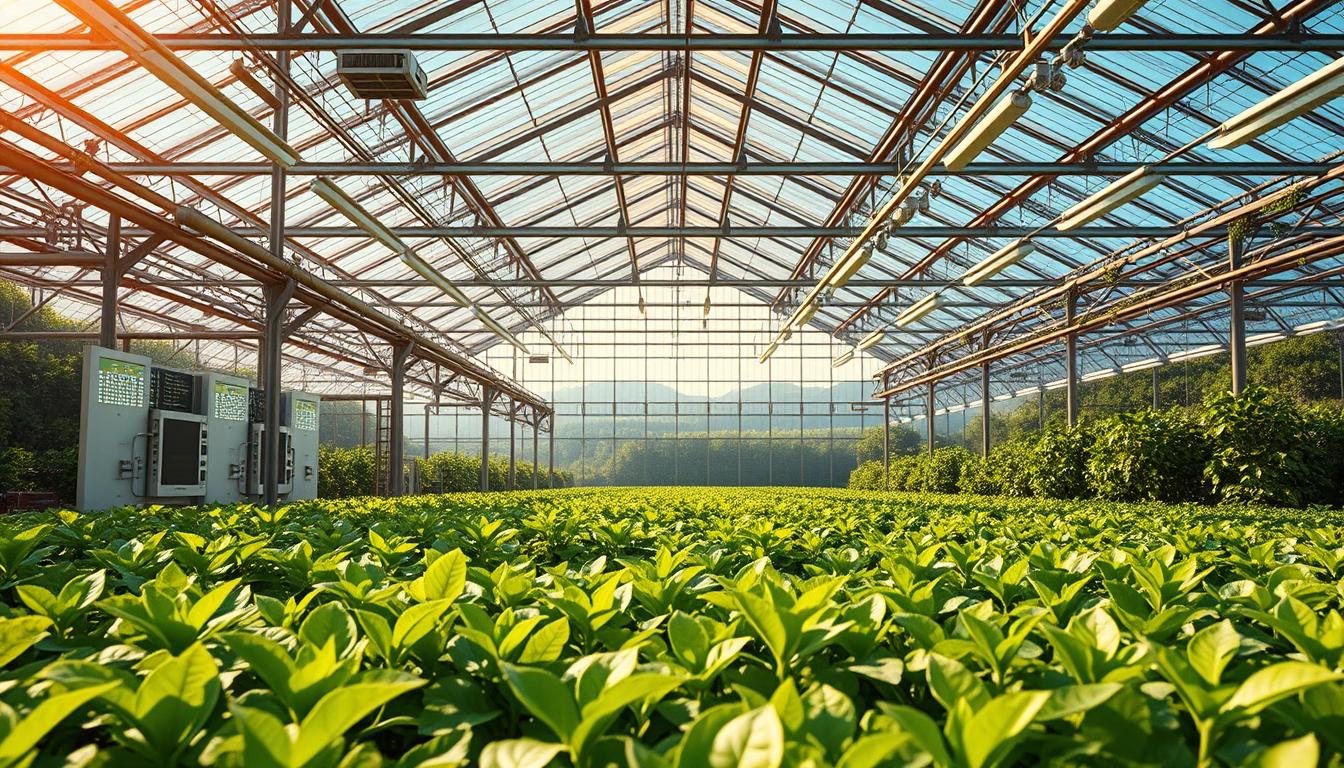
Small-scale greenhouse operations have seen significant benefits from AI integration. For instance, a study on a small herb farm showed that AI-enhanced climate control led to a 25% increase in yield and a 15% reduction in energy consumption.
Energy Savings Percentages from Real Installations
Several small-scale greenhouses have reported energy savings ranging from 10% to 30% after implementing AI-driven energy management systems.
Commercial Greenhouse Transformations
Commercial greenhouses are also experiencing transformative changes with AI. A large tomato farm, for example, achieved a 20% increase in production and a 12% reduction in water usage through AI-optimized irrigation and climate control.
Before and After Metrics for Large Operations
| Metric | Before AI Implementation | After AI Implementation |
|---|---|---|
| Energy Consumption | 100,000 kWh | 85,000 kWh |
| Water Usage | 500,000 liters | 440,000 liters |
| Crop Yield | 50,000 kg | 60,000 kg |
ROI Analysis and Payback Periods
The return on investment (ROI) for AI-enhanced greenhouses varies based on the scale of operation and the specific technologies implemented. Generally, small-scale operations see a payback period of 2-3 years, while larger commercial greenhouses can achieve ROI within 4-5 years.
Investment Recovery Timelines by Greenhouse Type
- Small-scale greenhouses: 2-3 years
- Medium-scale greenhouses: 3-4 years
- Large-scale commercial greenhouses: 4-5 years
Troubleshooting Common Sensor Issues and Maintenance
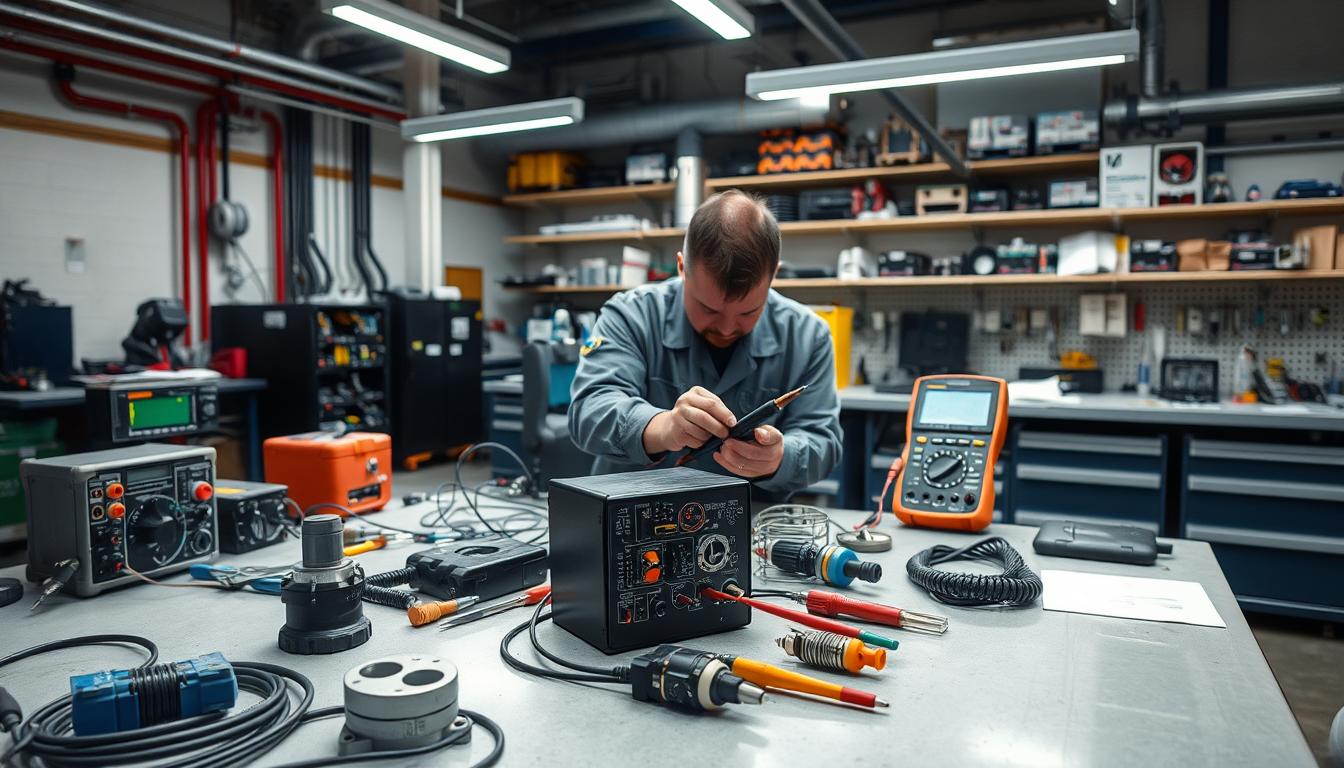
To ensure the longevity of your AI sensor network, regular troubleshooting and maintenance are essential. This proactive approach helps prevent minor issues from escalating into major problems that could disrupt greenhouse operations.
Identifying and Resolving Sensor Malfunctions
Sensor malfunctions can occur due to various factors, including hardware failure, software glitches, or environmental factors. Diagnostic procedures are crucial for identifying the root cause of the issue.
Diagnostic Procedures for Common Problems
- Check for loose connections or damaged cables
- Verify sensor calibration and configuration
- Monitor system logs for error messages
Regular Maintenance Schedule for Optimal Performance
Establishing a regular maintenance schedule is vital for ensuring that your sensor network operates at peak performance. This includes daily, weekly, and monthly tasks.
Daily, Weekly, and Monthly Maintenance Tasks
| Frequency | Task |
|---|---|
| Daily | Check sensor readings for anomalies |
| Weekly | Inspect sensor hardware for damage or wear |
| Monthly | Perform software updates and system backups |
When to Upgrade or Replace Sensor Components
Knowing when to upgrade or replace sensor components is crucial for maintaining system performance. Factors to consider include the lifespan of different sensor types and their compatibility with evolving greenhouse management systems.
Lifespan Expectations for Different Sensor Types
- Temperature sensors: 5-7 years
- Humidity sensors: 3-5 years
- CO2 sensors: 5-10 years
Conclusion: Embracing the Future of Smart Greenhouse Management
The future of greenhouse technology is undoubtedly tied to the advancement of AI-driven solutions. As we've explored throughout this article, integrating AI sensors and smart management systems can significantly enhance the efficiency and productivity of greenhouse operations.
By leveraging AI-driven solutions, growers can optimize energy consumption, maximize crop yields, and reduce labor-intensive tasks. The potential for smart greenhouse management to transform the agricultural industry is vast, enabling more sustainable and environmentally friendly practices.
As the future of greenhouse technology continues to evolve, it's clear that embracing these innovations will be crucial for staying competitive. By adopting AI-driven approaches, greenhouse operators can look forward to improved crop quality, reduced operational costs, and a more sustainable future.
The journey towards fully realizing the benefits of smart greenhouse management has just begun. With ongoing advancements in AI and sensor technology, the possibilities for further optimization and innovation are endless.
FAQ
What is the primary purpose of using AI-driven sensors in greenhouses?
The primary purpose is to optimize energy efficiency and crop yields, particularly for personal and energy-intensive crops, by leveraging advanced sensor technology and data analysis.
How do AI sensors transform greenhouse operations?
AI sensors transform greenhouse operations by shifting from manual to automated monitoring, enabling data-driven decision-making, and optimizing growing conditions for specific crops.
What types of sensors are essential for smart greenhouse monitoring?
Essential sensor types include environmental sensors (temperature, humidity, CO2), light and radiation sensors (PAR measurement), and soil and substrate monitoring sensors (moisture, EC, pH).
How do I plan my sensor deployment strategy?
To plan your sensor deployment strategy, map critical monitoring zones, create a sensor placement diagram, and consider factors like greenhouse size and crop requirements.
What is the importance of establishing baseline measurements?
Establishing baseline measurements is crucial for creating crop-specific parameter profiles, identifying normal vs. abnormal fluctuations, and setting up alert thresholds and notifications.
How can AI algorithms be used for predictive analysis?
AI algorithms can be used to analyze sensor data patterns, predict potential issues, and enable proactive measures to optimize growing conditions and prevent problems.
What are the key features of the Stromfee.AI system?
The Stromfee.AI system features an integrated sensor suite, energy consumption monitoring tools, and real-time monitoring and adjustment capabilities, including mobile application features and automated response configuration.
How can intelligent controls optimize energy consumption?
Intelligent controls can optimize energy consumption by implementing smart heating and cooling management, automated lighting schedules, and water and irrigation efficiency techniques based on real-time data.
How can data-driven decisions maximize crop yields?
Data-driven decisions can maximize crop yields by tailoring growing conditions to specific crop requirements, identifying and addressing growth limiting factors, and optimizing harvest timing and quality.
What are the benefits of using AI assistance for labor-intensive crops?
AI assistance can reduce manual monitoring requirements, streamline workforce allocation, and automate routine greenhouse tasks, improving efficiency and productivity.
What kind of results can be expected from AI-enhanced greenhouses?
AI-enhanced greenhouses can achieve significant energy savings, improved crop yields, and increased efficiency, as demonstrated by case studies and success stories.
How do I troubleshoot common sensor issues?
Troubleshooting common sensor issues involves diagnostic procedures, regular maintenance schedules, and understanding when to upgrade or replace sensor components.
What is the lifespan of different sensor types?
The lifespan of different sensor types varies, and understanding their expected lifespan is crucial for planning maintenance and replacement.