Taming the Peak: How HGV Ladeparks Manage High-Power Demand
The rapid adoption of heavy goods vehicles (HGV) is driving the need for high-power charging infrastructure, known as Ladeparks. However, these charging stations face significant challenges in managing the massive power demands of 1MW+ Megawatt Charging Systems.
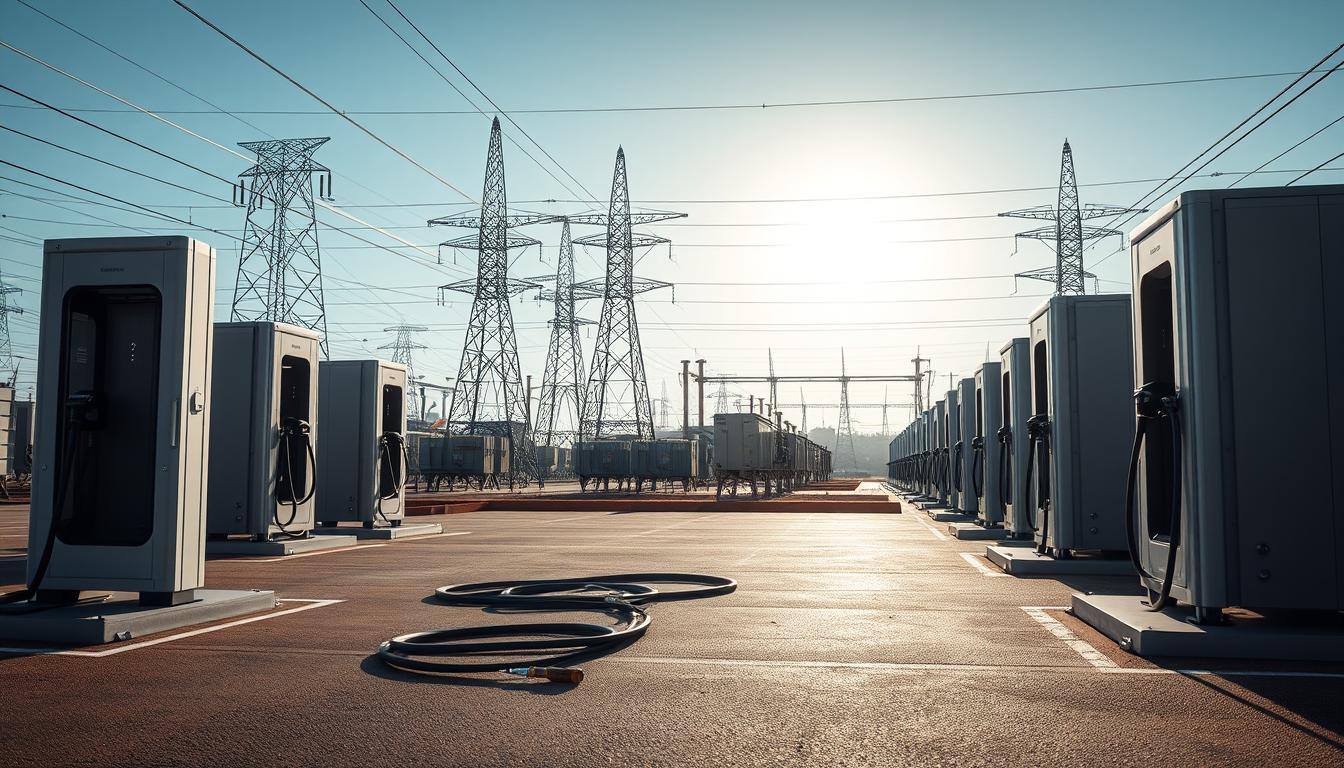
High-power demand poses a strain on the grid, making it essential for Ladeparks to implement effective power management strategies. By leveraging techniques such as peak shaving and load shifting, Ladeparks can mitigate the impact of high-power charging on the grid.
This article will explore how Ladeparks manage high-power demand and introduce the solutions that enable efficient and reliable HGV charging.
Key Takeaways
- Efficient power management is crucial for Ladeparks to handle high-power demand.
- Peak shaving and load shifting are effective strategies for mitigating grid strain.
- Megawatt Charging Systems require advanced infrastructure to support high-power charging.
- Ladeparks play a critical role in supporting the widespread adoption of HGV.
- Effective power management enables reliable and efficient HGV charging.
The Rise of Electric HGVs and Their Charging Challenges
With the rise of electric HGVs, the demand for high-power charging is surging, necessitating innovative solutions to manage peak loads. The logistics industry is undergoing a significant transformation as it transitions to more sustainable options.
The Transition to Electric Heavy Goods Vehicles
The shift towards electric HGVs is driven by the need to reduce carbon emissions and comply with increasingly stringent environmental regulations. Electric HGVs offer a cleaner alternative to traditional diesel-powered vehicles, contributing to improved air quality and reduced greenhouse gas emissions. As technology advances and economies of scale are achieved through mass production, electric HGVs are becoming a more viable option for fleet operators.
Unique Power Requirements of Commercial Fleets
Commercial fleets have distinct power requirements that differ significantly from those of passenger vehicles. Electric HGVs require high-power charging infrastructure capable of delivering megawatt-level power to recharge their large batteries quickly. This poses a challenge for the existing electrical grid, which must be upgraded or managed more efficiently to accommodate the increased demand.
The growing adoption of electric HGVs underscores the need for advanced charging solutions that can manage high-power demands without straining the grid. Effective management strategies are crucial to support the widespread adoption of electric HGVs.
Understanding Megawatt Charging Systems (MCS) for HGVs
The rise of electric HGVs necessitates a deeper look into Megawatt Charging Systems, a technology designed to meet the unique power demands of commercial fleets. Megawatt Charging Systems (MCS) are a new standard for high-power charging, distinct from the conventional EV charging systems used for passenger vehicles.
What Makes MCS Different from Standard EV Charging
MCS is designed to handle much higher power outputs than standard EV charging systems. While typical EV chargers might have power outputs in the range of 50-150 kW, MCS can deliver power in excess of 1MW (1000 kW).
The 1MW+ Power Demand Challenge
The high power demand of MCS poses significant challenges. To put this into perspective:
Real-World Power Equivalents
A 1MW power output is equivalent to the energy consumption of about 8-10 average American homes at any given time.
Technical Specifications of MCS
MCS is designed with technical specifications that support high-power charging, including advanced cooling systems and high-power connectors.
| Specification | MCS | Standard EV Charging |
|---|---|---|
| Power Output | 1MW+ | 50-150 kW |
| Connector Type | High-Power Connector | Standard EV Connector |
| Cooling System | Advanced Liquid Cooling | Air Cooling or Basic Liquid Cooling |
The Grid Impact Problem: When Power Spikes Meet Infrastructure Limitations
As electric HGVs become more prevalent, the grid faces unprecedented challenges in meeting their high-power charging needs. The high-power demands of Megawatt Charging Systems (MCS) for HGVs can lead to significant strain on the grid infrastructure.
Comparing HGV Power Needs to Everyday Examples
To put the power needs of HGVs into perspective, consider that a single HGV charging at 1MW is equivalent to the power consumption of about 200 homes simultaneously. This analogy highlights the scale of the challenge faced by grid operators in managing such high-power demands.
Grid Stability Concerns
The sudden spike in power demand from HGV charging can lead to grid stability issues, including voltage fluctuations and potential overloads on distribution networks. Ensuring grid stability is crucial to prevent disruptions not only to HGV charging but also to other consumers connected to the same grid.
Cost Implications of Unmanaged Peak Loads
If left unmanaged, the peak loads generated by HGV charging can result in significant additional costs for grid reinforcement and infrastructure upgrades. Moreover, utilities may impose high demand charges on commercial fleets, increasing their operational costs.
The need for smart charging solutions and load management strategies is becoming increasingly evident to mitigate these challenges.
Peak Shaving: The Battery Buffer Solution
Peak shaving, utilizing stationary battery systems, is revolutionizing the way we manage high-power demand at charging stations. This innovative approach is crucial for supporting the growing number of electric HGVs on the road.
How Stationary Battery Systems Work
Stationary battery systems are designed to buffer the high-power demand during peak hours. They operate by storing energy during off-peak hours and releasing it when demand is high.
Charging During Off-Peak Hours
During off-peak hours, when electricity demand is low, the stationary battery systems charge up. This stored energy is then used to supplement the grid during peak demand periods, reducing the strain on the electrical infrastructure.
Discharging During High Demand
When electric HGVs arrive at charging stations during peak hours, the stationary battery systems discharge to meet the high-power demand. This discharge helps to reduce peak demand charges and stabilizes the grid.
Implementation at Highway Charging Stations
The implementation of stationary battery systems at highway charging stations is a game-changer. It not only helps in managing peak demand but also enables the deployment of more charging stations without overloading the grid.
Some key benefits of implementing peak shaving at highway charging stations include:
- Reduced peak demand charges: By discharging during peak hours, these systems help lower the overall cost of electricity.
- Grid stability: Peak shaving helps maintain grid stability by reducing the strain during peak demand periods.
- Increased charging capacity: With the buffer provided by stationary battery systems, more HGVs can be charged simultaneously without exceeding grid capacity.
The Technical Architecture of Battery-Buffered Charging Systems
The technical architecture of battery-buffered charging systems is crucial for supporting the growing number of electric HGVs. These systems are designed to manage high-power demands efficiently, ensuring that the charging process is both fast and reliable.
Battery Sizing and Capacity Requirements
Battery sizing is a critical aspect of battery-buffered charging systems. The capacity required depends on several factors, including the number of HGVs to be charged, their battery sizes, and the desired charging speed. Adequate battery capacity ensures that the system can handle peak demands without straining the grid.
Power Electronics and Control Systems
Power electronics play a vital role in managing the flow of energy within battery-buffered charging systems. Advanced control systems are used to optimize charging profiles, manage battery health, and ensure safe operation. These systems enable the efficient distribution of power, minimizing losses and maximizing the availability of charging capacity.
By integrating sophisticated power electronics and control systems, battery-buffered charging solutions can effectively support the high-power demands of electric HGVs, facilitating a smoother transition to electric freight.
Smart Load Management: Optimizing Fleet Charging
Effective fleet charging requires more than just high-power charging infrastructure; it demands smart load management. As fleets transition to electric HGVs, managing the charging process intelligently becomes crucial to avoid peak demand charges, reduce strain on the grid, and ensure that vehicles are ready when needed.
The Software "Brain" Behind Intelligent Charging
The backbone of smart load management is sophisticated software that analyzes various factors to optimize charging. This includes monitoring the grid's current load, predicting energy demand, and adjusting charging rates accordingly. According to industry experts, "The key to efficient fleet charging lies in the ability to manage energy distribution dynamically"
"The key to efficient fleet charging lies in the ability to manage energy distribution dynamically"
.
Prioritizing Vehicles Based on Departure Times
One critical aspect of smart load management is prioritizing vehicles based on their departure times. Vehicles that need to depart sooner are given higher priority for charging, ensuring they are fully charged when needed. This is achieved through dynamic allocation algorithms that continuously assess and adjust charging priorities.
Dynamic Allocation Algorithms
Dynamic allocation algorithms play a vital role in optimizing fleet charging. These algorithms consider factors such as the current state of charge, departure times, and the overall energy demand of the fleet to allocate charging resources efficiently.
User Interfaces for Fleet Managers
Fleet managers rely on user-friendly interfaces to monitor and control the charging process. These interfaces provide real-time data on vehicle charging status, energy consumption, and potential issues, enabling informed decisions to optimize fleet operations.
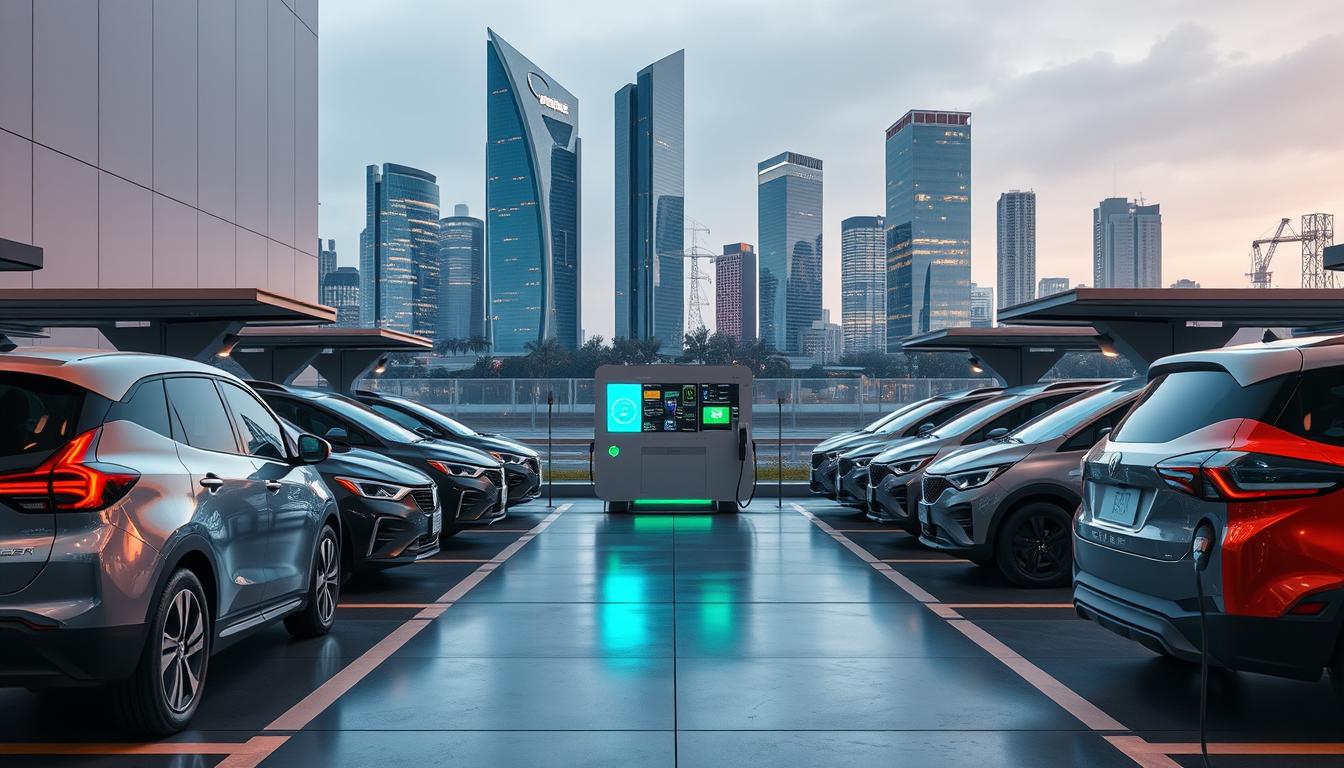
By implementing smart load management, fleets can significantly reduce their operational costs and environmental impact. It's a step towards a more sustainable and efficient future for electric freight.
HGV Charging at Depots: Load Shifting Strategies
Load shifting is a key component in optimizing HGV charging operations at depots. Effective load management can significantly reduce peak demand charges and improve overall efficiency.
Overnight Charging Optimization
Overnight charging optimization involves scheduling HGV charging during off-peak hours when electricity rates are lower. This strategy not only reduces costs but also helps in managing the grid load more effectively.
A detailed analysis of charging patterns and fleet schedules can help in optimizing the charging process. For instance, a table outlining the charging schedule and corresponding electricity rates can provide insights into potential savings.
| Time | Electricity Rate ($/kWh) | Charging Schedule |
|---|---|---|
| 22:00 - 02:00 | 0.08 | High |
| 02:00 - 06:00 | 0.06 | Medium |
| 06:00 - 08:00 | 0.12 | Low |
Integration with Facility Power Management
Integrating HGV charging systems with facility power management can enhance overall energy efficiency. This integration allows for real-time monitoring and control of energy usage, enabling better load shifting decisions.
Real-World Implementation Challenges and Solutions
Implementing advanced HGV charging solutions presents several real-world challenges that must be addressed to support the growing electric vehicle fleet. One of the primary concerns is the infrastructure requirements needed to facilitate high-power charging.
Space Requirements for Infrastructure
The installation of high-power charging points requires significant space, not just for the chargers themselves but also for the associated electrical infrastructure, such as transformers and switchgear. Efficient planning is crucial to minimize the footprint while ensuring that the charging capacity can be scaled up as needed.
Maintenance Considerations
Regular maintenance is essential to keep the charging infrastructure operational. This includes routine checks on the electrical systems and ensuring that the charging points are functioning correctly. Implementing a proactive maintenance schedule can help minimize downtime and optimize the availability of charging services.
Scaling for Growing Fleet Needs
As fleets continue to transition to electric HGVs, the demand for high-power charging will grow. Scalability is key, with charging infrastructure needing to be designed to accommodate future expansion. This involves not just increasing the number of charging points but also ensuring that the electrical supply infrastructure can support higher loads.
Economic Benefits of Advanced Load Management
The economic benefits of sophisticated load management strategies are becoming increasingly evident in the context of HGV charging infrastructure. By effectively managing peak demand, operators can significantly reduce their operational costs.
Reducing Connection and Demand Charges
One of the primary economic advantages of advanced load management is the reduction in connection and demand charges. Utility companies often charge based on peak demand, so by shaving these peaks, operators can lower their fees. This is particularly beneficial for HGV charging stations, where high-power charging can lead to substantial demand charges.
ROI Analysis for Battery Storage Systems
Implementing battery storage systems for peak shaving can yield a significant return on investment (ROI). By reducing peak demand charges and potentially selling stored energy back to the grid, operators can offset the costs of the battery system. A detailed ROI analysis should consider factors such as the cost of the battery, maintenance, and the revenue generated from energy arbitrage.

Regulatory Framework and Standards for HGV Charging
As the adoption of electric HGVs accelerates, the need for standardized charging protocols and supportive policies becomes increasingly important. The development of a robust regulatory framework is crucial to ensure the safe and efficient deployment of megawatt charging systems.
Current Standards for Megawatt Charging
The Megawatt Charging System (MCS) is emerging as a key standard for high-power charging of HGVs. Current standards focus on achieving high power transfer rates while ensuring safety and interoperability. Some key aspects of MCS include:
- High-power charging capabilities up to 1MW+
- Advanced communication protocols for efficient charging management
- Robust safety features to protect against electrical hazards
These standards are being developed in collaboration with industry stakeholders to ensure compatibility and scalability.
Policy Incentives for Smart Charging Infrastructure
Governments are implementing various policy incentives to encourage the adoption of smart charging infrastructure for HGVs. These incentives include:
- Grants and subsidies for the installation of megawatt charging stations
- Tax credits for fleets adopting electric HGVs and associated charging infrastructure
- Regulatory support for grid upgrades to accommodate high-power charging demands
Such incentives are crucial for accelerating the transition to electric HGVs and developing a comprehensive charging network.
Future Developments in HGV Charging Technology
The future of HGV charging is poised for significant advancements. As the demand for electric heavy goods vehicles continues to grow, the need for efficient and powerful charging solutions becomes increasingly important.
Vehicle-to-Grid (V2G) Potential
One of the most promising developments is Vehicle-to-Grid (V2G) technology, which allows HGV batteries to supply energy back to the grid during peak demand periods. "V2G technology can turn electric vehicles into mobile energy storage units, providing grid stability and additional revenue streams for fleet operators." This capability not only supports the grid but also offers potential economic benefits for vehicle owners.
Emerging Technologies for Power Management
Emerging technologies are playing a crucial role in enhancing power management for HGV charging. Among these, artificial intelligence (AI) and integration with renewable energy sources are particularly noteworthy.
Artificial Intelligence in Load Prediction
AI algorithms can predict charging demands more accurately, allowing for better load balancing and reduced strain on the grid. "By analyzing historical data and real-time inputs, AI can optimize charging schedules, minimizing peak demand periods."
Integration with Renewable Energy Sources
Integrating HGV charging infrastructure with renewable energy sources, such as solar or wind power, can significantly reduce the carbon footprint of electric HGV operations.
"Renewable energy integration can make HGV charging more sustainable and cost-effective in the long run."
This approach aligns with global efforts to reduce greenhouse gas emissions and promote sustainable transportation.
Conclusion: Building a Sustainable Infrastructure for Electric Freight
The transition to electric Heavy Goods Vehicles (HGVs) is crucial for reducing carbon emissions in the transportation sector. However, the high-power demand required for HGV charging poses significant challenges to the grid infrastructure. Effective management of this demand is essential for building a sustainable infrastructure for electric freight.
Peak shaving and load shifting strategies, including the use of battery-buffered charging systems and smart load management, play a vital role in mitigating the grid impact. By implementing these HGV charging solutions, fleet operators can reduce their connection and demand charges, while also contributing to grid stability.
A sustainable infrastructure for electric freight requires a collaborative effort from industry stakeholders, policymakers, and grid operators. By working together, we can create an efficient and scalable charging infrastructure that supports the growing demand for electric HGVs, ultimately driving the adoption of cleaner transportation solutions.
FAQ
What is peak shaving in the context of HGV charging?
Peak shaving refers to the use of stationary battery systems to buffer the high-power demand of Megawatt Charging Systems (MCS) for HGVs, reducing the strain on the grid during peak hours.
How does load shifting help manage HGV charging?
Load shifting involves optimizing the charging of HGVs during off-peak hours or when energy demand is low, thereby reducing the strain on the grid and minimizing peak demand charges.
What are Megawatt Charging Systems (MCS), and how do they differ from standard EV charging?
Megawatt Charging Systems are designed for high-power charging of electric HGVs, capable of delivering 1MW+ of power. They differ significantly from standard EV charging systems in terms of their power output and technical specifications.
What are the benefits of using battery-buffered charging systems for HGVs?
Battery-buffered charging systems help reduce peak demand on the grid, lower connection and demand charges, and provide a more stable and efficient charging process for HGV fleets.
How do smart load management systems optimize HGV charging?
Smart load management systems use software to prioritize HGV charging based on factors like departure times, energy availability, and grid conditions, ensuring efficient and optimized charging for fleets.
What are the challenges associated with implementing advanced HGV charging solutions?
Challenges include space requirements for infrastructure, maintenance considerations, and the need to scale charging capacity as fleets grow, among others.
How do regulatory frameworks and standards impact HGV charging infrastructure?
Regulatory frameworks and standards play a crucial role in shaping the development of HGV charging infrastructure, influencing the adoption of technologies like Megawatt Charging Systems and smart charging solutions.
What future developments can be expected in HGV charging technology?
Future developments include advancements in vehicle-to-grid (V2G) technology, emerging power management technologies, and the integration of renewable energy sources into HGV charging infrastructure.